



Heat pumps work quietly in the background for most Maryland homeowners. They keep your home warm through those chilly mornings and cool during humid summers. So when your heat pump suddenly makes a sound that feels out of place, it can catch you off guard. Some noises are normal. Others are your system’s way of saying something needs attention, and soon.
Understanding the difference helps you protect your comfort and avoid a bigger repair down the road. Let’s break down which sounds are normal, which ones are red flags, and when it is time to call GAC Services for emergency HVAC repair.
Normal Heat Pump Sounds
Not every noise means trouble. A few sounds simply come with everyday operation.
- Gentle humming: This is the sound of the compressor and fan running normally.
- Occasional whooshing: During winter defrost cycles, a quick whoosh is expected.
- Light clicking: A soft click during startup or shutdown is normal.
If the sounds stay light and predictable, you can usually assume your heat pump is working the way it should.
Noises That Signal a Serious Problem
When a new sound shows up or becomes noticeably louder, it is time to pay attention. These noises often point to internal issues that require professional repair.
- Grinding or Screeching: Grinding or screeching usually means a motor bearing is wearing out. If left running, the motor can fail completely. Turn off the heat pump and call GAC Services right away.
- Banging or Clanking: These noises often mean a loose fan blade or a broken part moving inside the unit. If the piece breaks free, it can damage other components. Shut the system down to prevent further damage.
- Hissing or Bubbling: This often points to a refrigerant leak. Refrigerant flows through pressurized lines, so any sign of leaking needs immediate attention. Do not run the system. Call for service as soon as possible.
- Buzzing or Electrical Humming: A louder buzzing sound can indicate a failing capacitor, loose wiring, or an electrical control issue. Heat pumps that struggle to start often make this noise. If you smell burning along with the noise, stop the unit and call immediately.
- Rattling or Vibrating: Light vibration is normal, but loud rattling may mean a loose panel or debris inside the fan housing. Wind, ice, and branches commonly cause this in Maryland winters. Check around the unit for debris but avoid reaching inside.
- Loud Metal on Metal Noise: If it sounds like metal scraping or hitting something, a fan blade may be striking an obstruction or the compressor may be failing. Turn off the heat pump right away.
When It Is an Emergency
You should call for emergency HVAC repair if you notice:
- A burning smell or visible smoke
- Breakers tripping when the unit turns on
- Loud noises that repeat or increase
- The heat pump blowing cold air in heat mode
These issues can escalate quickly or signal a developing safety hazard.
What to Do If You Hear Strange Noises
If your heat pump starts making unusual sounds, here are a few steps you can safely take at home.
- Turn the system off: This prevents additional damage and protects your equipment.
- Check for obvious obstructions: Look for branches, ice, or snow around the outdoor unit.
- Avoid opening panels: Heat pumps contain high voltage components and refrigerant.
- Call GAC Services: We offer same-day diagnosis for homeowners in Gaithersburg and Glen Burnie, Maryland.
How Professional Repair Saves You Money and Prevents Damage
Calling an HVAC professional early does more than resolve the noise. It can also protect you from much bigger problems.
- Protects the compressor: Many serious noises tie back to early compressor strain. Addressing the issue early can prevent total failure.
- Reduces energy waste: A struggling part forces the heat pump to work harder and run longer, which drives up energy bills.
- Prevents full system breakdowns: Minor problems can quickly lead to larger failures if the system continues running.
Early intervention keeps your heat pump working efficiently through Maryland’s changing seasons.
GAC Services’ 24-Hour Emergency HVAC Repair
Heat pump problems rarely happen at convenient times. That is why GAC Services offers 24-hour emergency repair across Maryland. Our licensed technicians arrive prepared to diagnose the issue quickly and restore comfort to your home. We serve Montgomery, Frederick, Howard, and Anne Arundel County.
To help prevent future emergencies, we also offer maintenance plans that keep your system running smoothly all year.
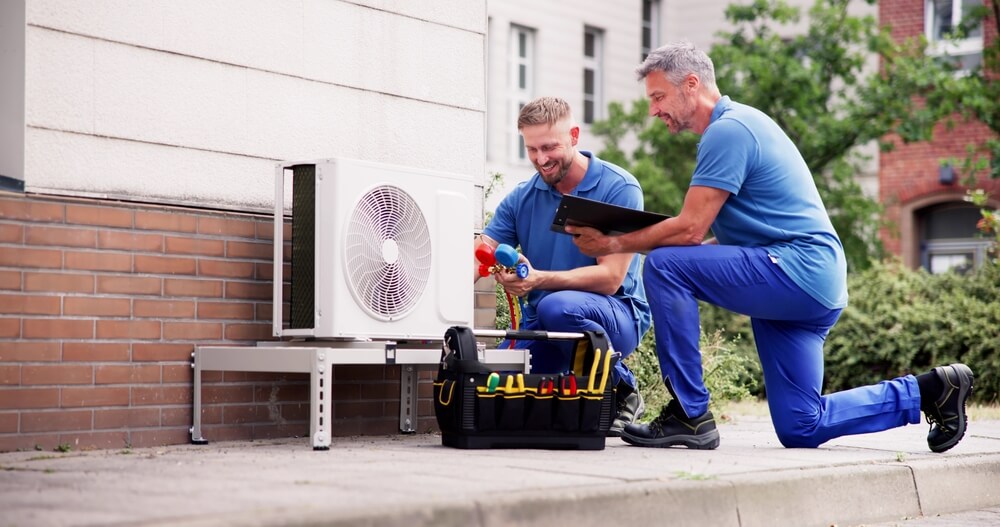
If Your Heat Pump Is Making Strange Noises, Call GAC Services Today
Some sounds are harmless. Others are a clear sign your heat pump needs immediate attention. If you notice loud or unusual noises, do not wait for the issue to grow. Call GAC Services for fast, professional HVAC repair.
Our technicians are available around the clock to help keep your home comfortable and safe.
Most people do not think about the thermostat until it stops doing its job. Usually it’s as simple as the batteries have run out. The good news is that replacing them is quick and something you can do yourself. A thermostat running on weak batteries can shut down your heating on a January night in Montgomery County or leave you sweating through a July afternoon in Anne Arundel. Swapping batteries once a year helps you avoid surprises.
Signs Your Thermostat Batteries Need to Be Replaced
Before a thermostat quits, it usually shows a few hints. You might notice:
- The screen fading or going dark
- A low-battery message blinking on the display
- The system not kicking on when you adjust the temperature
If you spot one of these signs, checking the batteries is the first step.
What You’ll Need
This job doesn’t take much. Just:
- Fresh batteries (AA, AAA, or the type listed in your manual)
- A small screwdriver if your model has screws holding the cover
THAT'S IT!!
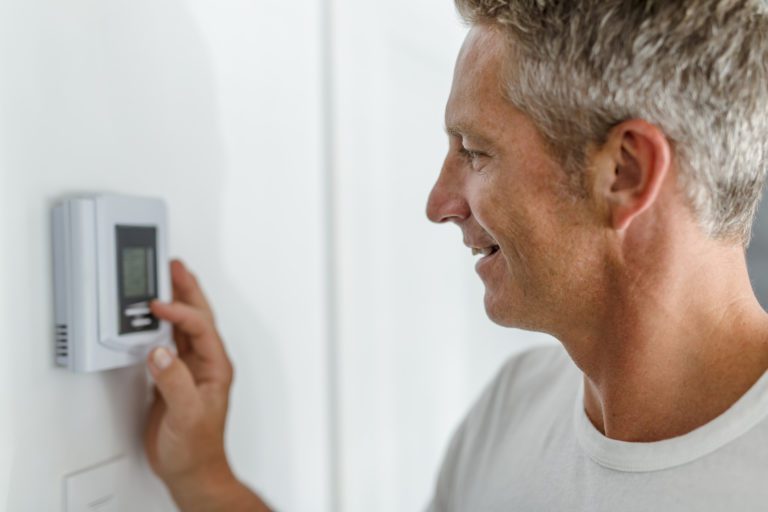
How to Replace Thermostat Batteries
Here’s the basic process most thermostats follow:
- Turn off the system if your manual suggests it. Some don’t require this step.
- Remove the cover. Many pop off with light pressure. If not, look for clips or screws.
- Take out the old batteries. Pay attention to how they’re lined up.
- Put in the new ones. Match the plus and minus symbols to the markings inside.
- Snap the cover back on and test. The screen should light up and the system should respond.
You have just replaced your batteries.
Notes on Popular Models
Not every thermostat handles batteries the same way. A few quick tips:
- Honeywell: Most take AA or AAA. The compartment is either behind the cover or in a slide-out tray.
- Nest: Many Nest models charge through your HVAC system and don’t need manual battery changes. Some have a small backup battery that needs recharging with a USB cable if the main power is out. Knowing which version you own can save you from worrying when the screen goes dark.
- Ecobee: These are usually hardwired to your home’s electrical system. Some include a backup battery that preserves settings during an outage. If that backup fails, the thermostat may reset unexpectedly.
If you’re not sure which you have, check the manual or look up the model number online.
Easy Maintenance Habits
It’s easy to forget about thermostat batteries until they die. A few habits can help:
- Change them once a year, like when you swap smoke detector batteries
- Keep extras in a drawer so you’re not caught off guard
- Have GAC Services check the thermostat during your yearly heating or cooling tune-up
Maryland homes work HVAC systems hard through humid summers and chilly winters, which makes small maintenance steps even more important. Combining a quick battery swap with a seasonal tune-up means you’re less likely to deal with sudden breakdowns when the system is under heavy use.
When to Call a Professional
If the thermostat still doesn’t work after new batteries, there’s probably another problem. Call for help if:
- The screen stays blank
- The system won’t respond even though the display lights up
- Wires inside look loose or damaged
- You’re interested in upgrading to a smart thermostat like a Nest thermostat
At that point, a technician can check the wiring, replace the unit, or set up a new thermostat that works better for your home.

GAC Services Keeps Maryland Homes Comfortable
Thermostat batteries are small but important. Replacing them once a year keeps your system running and saves you the headache of losing heat in the winter or cooling in the summer.
If fresh batteries don’t solve the problem, or if you’re ready for an upgrade, GAC Services can help. We serve Montgomery, Frederick, Howard, Carroll, Anne Arundel, and Prince George’s counties with trusted HVAC service. Call today to schedule an appointment online and keep your home comfortable year-round.
As temperatures drop, it's essential to ensure your heat pump operates at peak efficiency. Heat pumps provide reliable warmth without the high energy costs of other heating systems, but optimizing their performance in winter is key to maximizing savings and comfort. Here are our top tips on how to make a heat pump more efficient in winter, helping you get the most out of your system all season long.
7 Ways to Improve Your Heat Pump’s Efficiency
1. Schedule Regular Heat Pump Maintenance
Routine maintenance is one of the most effective ways to improve the efficiency of your heat pump. In the winter, your system works hard to maintain indoor temperatures, so it's critical to keep your equipment clean and working properly. It’s recommended you schedule professional heat pump maintenance once a year in the fall. This service ensures every component is in top shape and ready to handle the cold.
2. Optimize Thermostat Settings
The thermostat settings you use during winter play a significant role in heat pump efficiency. Avoid setting your thermostat too high, as this can force your heat pump to work overtime and lead to higher energy consumption. Instead, aim for a consistent, moderate temperature. Better yet, set a schedule to maintain warmer temperatures while you’re at home and cool temperatures when you’re sleeping or away from the house.
3. Adjust Fan and Airflow Settings
Proper airflow is essential to heat pump performance, especially during the winter. Many homeowners don't realize that adjusting the fan setting to "auto" can help the heat pump run more efficiently. This setting allows the fan to work only when heating is needed, reducing unnecessary energy usage. Additionally, make sure vents and registers are unobstructed to promote even heating throughout your home.
4. Keep the Outdoor Unit Clear
Winter weather can obstruct your heat pump's outdoor unit with snow, ice, and debris, reducing its efficiency. To prevent these issues, regularly clean the outdoor unit of any buildup. Use a broom or brush to gently remove snow and keep a few feet of clearance around the unit to allow for unrestricted airflow. A clean outdoor unit allows your heat pump to operate as efficiently as possible.
5. Reverse Your Ceiling Fans
Many don't realize that ceiling fans can play a role in heating efficiency. By reversing the direction of your ceiling fan, you can push warm air down into the room, reducing the workload on your heat pump. Most fans have a reverse setting specifically for winter, which helps distribute warmth more evenly throughout your living space.
6. Seal and Insulate Your Home
Drafts and poor insulation can significantly impact the performance of your heat pump in winter. To get the most from your heating system, inspect your home for air leaks around windows, doors, and ductwork. Sealing these areas can reduce heat loss, enabling your heat pump to maintain a comfortable temperature without excessive strain. Improving insulation in attics and walls also helps contain warmth, allowing your heat pump to operate more efficiently and reduce energy costs.
7. Upgrade Your Heat Pump
If your current heat pump is more than 10 years old, it may be time to consider an upgrade. Modern heat pumps are designed with advanced technology to offer greater efficiency and performance. An upgraded system can reduce energy costs and deliver improved heating during the winter months. Professional heat pump installation ensures you get the most out of your new, high-efficiency system.
Speak to a Heat Pump Expert
With over 50 years of experience, GAC Services' factory-trained technicians can help ensure your heat pump performs efficiently all winter long. Whether you need professional maintenance or are considering an upgrade to a more efficient system, our team is here to help.
Call GAC Services at (301) 691-3811 to schedule service or to request a free installation estimate!
Did you know you don’t have to exclusively use a central cooling or heating system for your home? Heat pumps rival air conditioners and furnaces as reliable heating and cooling systems for Maryland homeowners. In fact, Maryland Matters reports that roughly a quarter of homes in Maryland have heat pumps installed.
In this heat pump guide, we’ll take a look at how these revolutionary HVAC units work, their benefits, and how to get the most out of your unit.
What Is a Heat Pump?
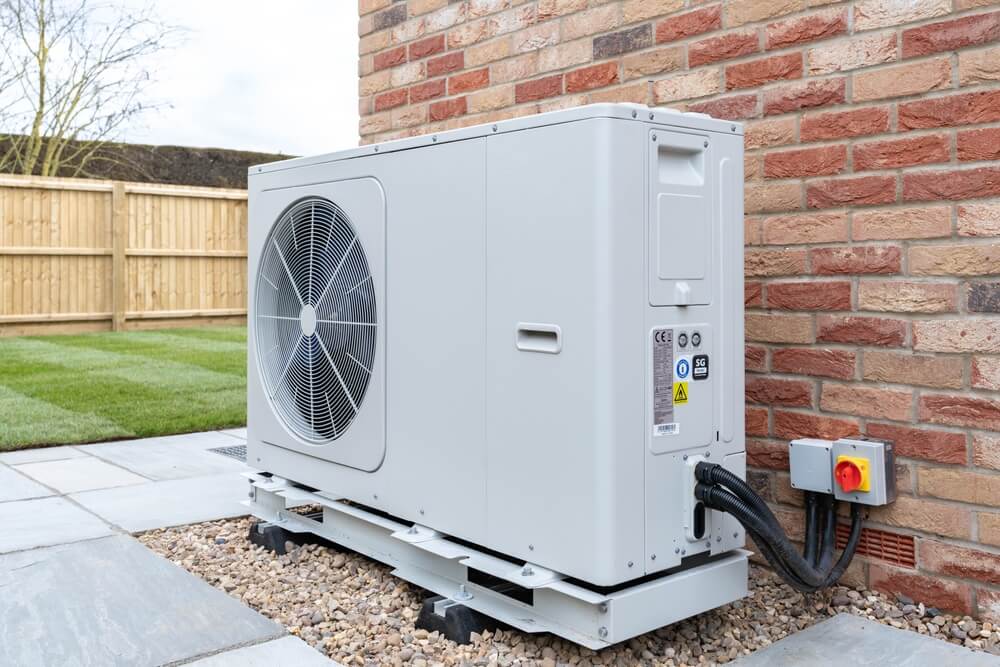
A heat pump is an efficient system that transfers heat from one location to another using relatively small amounts of energy. This heat transfer can be utilized for heating and cooling purposes, making heat pumps versatile solutions for summer and winter.
How Does a Heat Pump Work?
Rather than generating heat with gas or electricity, heat pumps transfer heat from the Earth. They use a refrigerant that cycles through evaporation and condensation, supported by a compressor and heat exchanger coils.
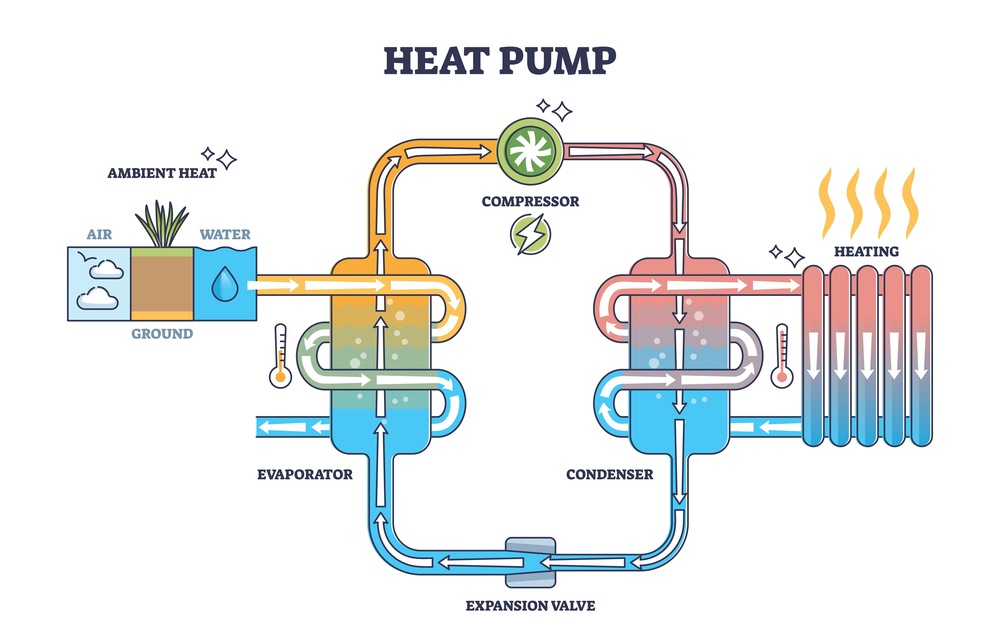
Heating Mode
- Heat Absorption: Extracts heat from an external source (air or ground).
- Heat Transfer: Refrigerant absorbs heat and evaporates into a gas.
- Compression: Compresses the gas, raising its temperature.
- Heat Release: Heat is released through indoor coils to warm the building.
- Refrigerant Cycle: Cools down, condenses back into a liquid, and repeats the cycle.
Cooling Mode (Reversed Process)
- Heat Absorption: Absorbs heat from indoor air, causing the refrigerant to evaporate into a gas.
- Heat Transfer: Expels absorbed heat to the outside air or ground.
- Compression and Condensation: Compresses and then condenses the refrigerant, releasing heat outdoors.
- Cooling Release: Cycles cool the refrigerant back indoors to absorb heat and cool the space.
Types of Heat Pumps
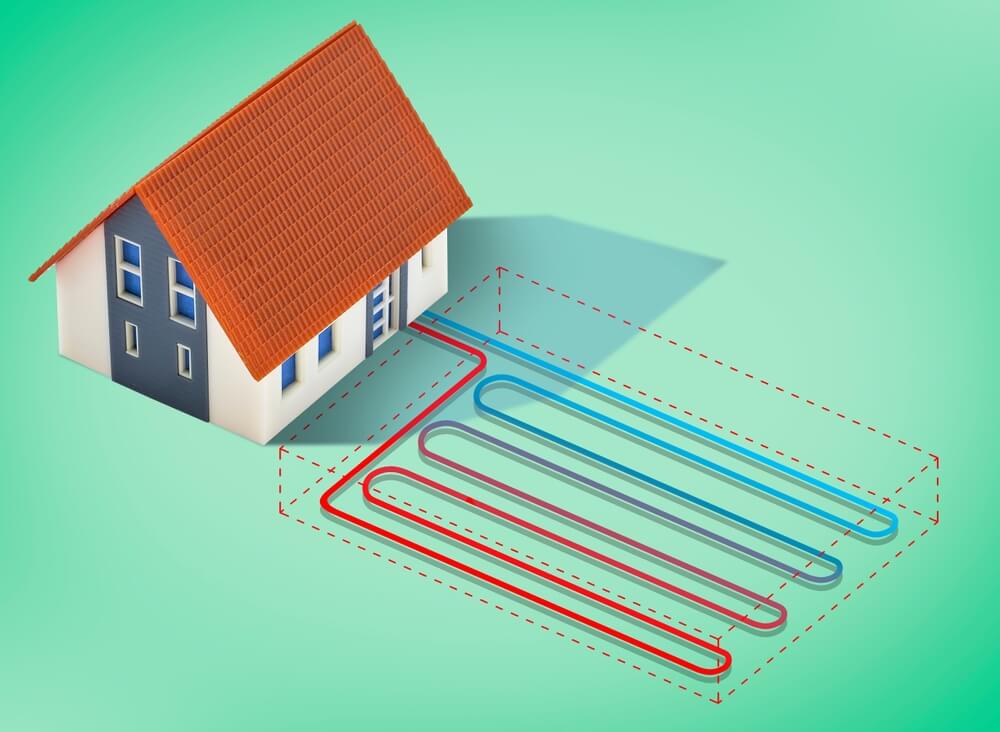
A heat pump guide wouldn’t be complete without describing the various types of heat pumps you can install. Before you purchase the most common or cheapest heat pump, it’s important to research the various styles offered.
Consulting an experienced HVAC technician is wise. This way, you can have your home and property inspected to accurately understand which heat pump style meets your needs.
Here are the three types of heat pumps you can install:
1. Air-Source Heat Pumps: These units extract heat from the outside air. Compared to other styles, they are easier and less expensive to install and maintain. Air-source pumps come in both ducted and ductless styles.
- The average cost of an air-source heat pump unit and installation is between $3,500 to $7,500.
2. Ground-Source Heat Pumps: Also known as geothermal heat pumps, these units extract heat from the ground or groundwater. They are more efficient than air-source heat pumps, particularly in extreme temperatures, but have higher installation costs due to the need for ground loop systems.
- The average cost of a ground-source heat pump unit and installation is between $10,000 to $30,000.
3. Water-Source Heat Pumps: These units extract heat from a body of water, such as a lake or a well. While they are efficient, their use is location-dependent because they need an available source of water.
- The average cost of a water-source heat pump unit and installation is between $2,000 to $10,000.
Pros & Cons of Heat Pumps
As you would with any other major purchase, you should consider the pros and cons of heat pumps. While these systems will efficiently heat and cool your home year-round, they are also more expensive than other heating and cooling systems.
Pros of Heat Pumps
- Energy Efficiency: Heat pumps are more efficient than other systems. In fact, they can achieve over 300 percent efficiency by producing three to four times more energy.
- Cost Savings: Due to their unique process and high-efficiency rate, heat pumps save you more money in the long term.
- Year-Round Use: These systems provide both heating and cooling, eliminating the need for multiple systems in your home.
- Environmental Benefits: Heat pumps have a reduced carbon footprint, as they often use less electricity and can be powered by renewable energy sources.
- Safety: Since these units don’t rely on gas, the risk of random combustion is lowered.
- Low Maintenance: Heat pumps generally require less maintenance compared to traditional HVAC systems.
- Improved Air Quality: Your home’s air quality can be improved through better humidity control, and filtration can improve indoor air quality.
- Quiet Operation: Modern heat pumps operate quietly, making your home more peaceful. Loud noises can indicate that there’s an issue with the unit.
Cons of Heat Pumps
- High Initial Cost: Heat pumps have a higher initial cost than traditional HVAC systems. However, their efficiency makes up for this fact.
- Energy Source Dependency: While efficient, heat pumps still require electricity to operate, which may not be as cost-effective if your area’s electricity rates are high.
- Climate Sensitivity: Air-source heat pumps may be less efficient in extremely cold climates, though advanced models have improved performance in low temperatures.
- Water-Source Limitations: Water-source heat pumps require access to a body of water, which limits their applicability for some homeowners.
How to Maintain a Heat Pump
To avoid issues like heat pump leaks or strange noises, it’s important to routinely service your heat pump. For homeowners, it’s important to clean the unit and change the air filter regularly. However, since they operate year-round, it’s best to have them tuned up at least twice a year – once in the spring and once in the fall before the weather severely changes.
It’s best to partner with an HVAC company that can service your unit throughout the year so it remains consistently clean and safe.
However, if you notice any of the following problems with your unit, you may need repairs:
- Your unit is not turning on.
- Your unit is making loud noises.
- There are unusual spikes in your energy bill.
- Your unit is freezing or icing over.
Do you want to learn more about heat pumps? Speak to GAC Services’ heat pump contractors in Gaithersburg, Frederick County, Montgomery County, and Howard County, Maryland.
Contact us today to schedule an appointment.
Now that the weather is cooling down, it’s time to turn off the air conditioner and prepare for the chilly winter weather. It’s time to bring out the blankets, dust off your winter coats, and fire up the heater and settle in for a cozy winter indoors.
But even if your heater worked perfectly last year, it may have a few issues this year. To learn more about common problems heaters have during the winter, take a look our information below.
For heating services throughout Maryland, trust GAC Services – call our team at {{dc:acf:option_field field="contact_info_phone_text"}} or contact us online today!
Heat Cycling
When your heater is turning on and off far more often than usual – this is called heat cycling. Heat cycling lowers system efficiency and raises your utility bills, so even if you think you’re getting enough heat, you’ll want to get your heater fixed as soon as you can to avoid further issues and higher bills.
Heat cycling can indicate an excessively dirty blower or filter, or it could be the result of a malfunctioning thermostat. Change your filter, or take a look at your thermostat. If you notice your thermostat is broken or a fresh filter doesn’t solve the problem, call a professional from GAC Services to take a look. They can easily pinpoint the problem and clean various areas of the heater.
Carbon Monoxide Leaks
Whether your heater is brand new or old, you need to install a carbon monoxide detector in your home. Carbon monoxide can easily go undetected – it’s tasteless, colorless, and odorless, and it can be deadly in the right amounts.
Carbon monoxide leaks are most common in furnaces that are 10 to 15 years old, so if your furnace is at least a decade old, have it inspected, just in case. If your carbon monoxide detector catches a trace of carbon monoxide, call a professional immediately. They’ll know how to effectively find leaks and provide proper repairs.
Dry Air
Dry air can be troublesome and uncomfortable, especially if your skin is sensitive or already dry. When your home has an unusually low humidity, your skin might feel dry and itchy. The lower humidity levels can affect the efficiency of your heating system.
Dry air holds less heat, so it may take more for your home to be comfortable and cozy. To remedy this issue, use a humidifier. You can use an individual humidifier in a main room, or you can install a humidifier in your HVAC system for more even moisture levels throughout the home. This will not only protect your wood furniture and features, but it will also make your home warmer and cozier throughout the cold, winter weather.
Inconsistent Heating
You want your whole house to be properly heated, so walking from a warm room to a chilly one can be irritating. Look around doors and windows for holes or cracks to ensure your weatherstripping is intact – there could be an issue with your insulation.
If everything looks properly sealed and insulated, the heating system’s coils or filter might be dirty. The uneven heating can also be a result of dirty air ducts or clogged vents. Check the filter, and get your system cleaned to see if that solves the problem.
Sometimes, entire floors can be warmer than others. When your upper stories are warm while the lower floors are cold, consider closing the upstairs vents to direct warm air to the bottom levels. Because heat rises, the cozy heat downstairs will eventually drift upstairs.
Lack of Heat
When your heating system isn’t warming your home at all, it could be due to a number of problems. Before you check anything else, look at your thermostat to make sure it’s working and has new batteries. A lack of heat could easily be caused by a faulty thermostat.
If you have a heat pump, it could be struggling with the winter weather. Icy wind and snow can put heavy frost on your heat pump, which can prevent the heat pump from functioning properly. Check that your heat pump has defrost settings to keep the ice and frost from hindering the heating system.
For a furnace, you may have a problem with your pilot light. If your pilot light isn’t on, check to see if it has a steady power source. If not, the assembly may be blocked and dirty, in which case you should call a professional to carefully clean it out for you.
No matter the heating issue, our HVAC specialists at GAC Services can detect the problem and offer the best solution. We may suggest you replace your furnace, or we may recommend a few simple repairs.
Choose GAC Services for HVAC services during the winter season – call us at {{dc:acf:option_field field="contact_info_phone_text"}} or contact us online today.
Modern HVAC systems are extremely efficient and effective at maintaining our comfort, partially due to the fact that they operate on a closed loop. But while the benefits of a closed-loop heating and cooling system are substantial, it’s not all perfect.
Because our homes are closed off and well sealed, your space can become inundated with common air pollutants, allergens, and viruses, many times more so than that of outdoor air, according to the Environmental Protection Agency (EPA).
This situation can have significant implications for our health. Prolonged exposure to indoor air pollutants can exacerbate allergies, respiratory issues, and even lead to more severe health problems. Additionally, concerns about indoor air quality have become even more pressing with the heightened focus on airborne viruses.
Proper ventilation, air purification systems, and regular maintenance of HVAC systems have emerged as essential practices to mitigate these risks and ensure a healthier indoor environment. If you think that your heater could be making you sick, you can maintain clean and safe indoor air for your family by taking the right measures with your HVAC system.
Why Is It Hard to Get Fresh Air in a Modern Home?

Our homes are well-insulated and air-sealed, and our HVAC systems generally run on a closed loop that simply circulates the air already present in our homes. All of this together means that we stay quite comfortable and that our energy or fuel costs are lower, but it also means that air pollutants can get in but rarely get displaced or go out.
This can contribute to many symptoms that a heat pump, furnace, or forced-air system may cause, including:
- Headaches
- Allergies
- Flu-Like Symptoms
- Lightheadedness
Because of these things, monitoring and maintaining your indoor air quality is a huge deal. There are, fortunately, many ways to accomplish this, and many homeowners never deal with any detrimental health issues due to the state of their HVAC system.
Can Heat Pumps Make You Sick?
As with any other HVAC system, heat pumps don’t exactly make you sick. However, it’s crucial to understand that the system itself can have an impact on your health. HVAC systems, including heat pumps, maintain the indoor environment, and how they do so can impact your well-being. Various factors like air quality, humidity levels, and the presence of allergens or pollutants in your home's air all contribute to your overall health.
Understanding how these elements interplay with your HVAC system is vital to ensuring a comfortable and health-conscious living space.
Additionally, heat pumps can emit carbon monoxide, which poses a huge risk to your health and safety. Like any heating system that uses gas, a hybrid heat pump with gas can produce carbon monoxide.
That's why it's very important to regularly change the air filter and perform routine maintenance. It's also a good idea to have carbon monoxide detectors in your home. Gas is a great way to heat your home, but you have to be careful with it.
Can Not Changing an Air Filter Make You Sick?
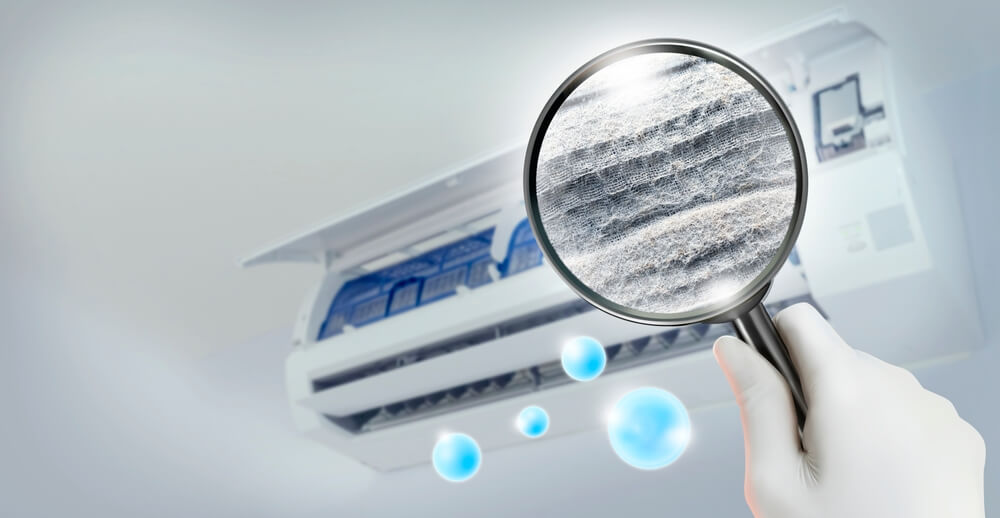
The air filter in your heat pump is responsible for catching dust, mold spores, dust mites, pollen, and a slew of other allergens. If the air filter isn’t replaced regularly, it will eventually become bogged down with these pollutants, which will then be blown throughout the home.
This is why changing your air filter is so important. It’s a simple task, and when done regularly, you will be avoiding one of the most common contributors to illness that can be attributed to a heat pump or HVAC system.
Why Is Regular Heat Pump Maintenance Important?
Heat pumps and other HVAC equipment are significant investments, which is why you need to keep them in good condition so you can get the most out of them. Regular maintenance on your heat pump will ensure that it is working properly, running efficiently, and lasting a long time.
If you don’t tune up your heating unit, it may break down earlier than expected and become filthy, leading to poor air quality. Routine heating maintenance service removes these risks, substantially boosting your air quality.
Avoid Heater Sickness and Tune Up Your HVAC System
At GAC Services, we’ve been providing comprehensive heat pump maintenance services and more for decades. We have the skills and knowledge needed to ensure that your heat pump moves cleaner air, providing a healthy and safe living environment for you and your family.
Contact us online or call us at (240) 224-0192 to find out more about the advantages of our Prime Maintenance Membership. Schedule an appointment with us today, and let us know if you are having any issues with your heat pump in Gaithersburg, Maryland.
No matter the appliance or fixture, if anything is leaking in your home, it’s generally a serious problem. Not only does it mean that you need to have your equipment repaired, but it also means you risk the chance of water damage, mold growth, and other issues from taking place in your home.
When you notice that your heat pump is leaking, it may mean that you’ve been neglecting heat pump tune-up services. If you notice that your heat pump is leaking water or any other type of fluid, you need to have a professional take a look at your unit right away.
As a homeowner, it’s important to learn about the ins and outs of your heat pump so you know how to handle certain situations if they ever arise. Heat pumps are versatile systems that provide solutions throughout the entire year. With that in mind, for them to run efficiently year-round, you need to follow a guide so you can properly maintain the system.
Is a Heat Pump Leak a Big Problem?
As far as HVAC problems go, a heat pump leaking water on the inside is not as serious as it may seem. This issue is actually not as weird or uncommon as you might first think, and while it does usually require professional heat pump repair, the labor is typically short, simple, and affordable. So, while the issue needs to be addressed, a leak is not as serious as your heat pump making loud noises or other problems.
Leaking water is not too serious in itself, but if left unattended, it could lead to costly issues with your unit. Beyond the potential for water damage and mold growth in your home, standing water within the system can cause component wear and electrical issues. If not addressed, standing water can eventually cause the heat pump to not turn on, creating a more serious problem.
What Causes Heat Pump Leaks?
Since both a heat pump and your run-of-the-mill air conditioning system use the basic principles of refrigeration, many of the potential causes are very similar or the same.
The most common causes of a heat pump leak include:
- Presence of Ice or Frost in the Pump: There are many reasons why your heat pump can have ice forming on the coils. These can include simple problems like air flow (usually a dirty air filter) or bigger problems like low refrigerant levels. In the case of low refrigerant, you’ll want an expert to locate the leak and fix it right away to avoid losing cooling power.
- Cracked Overflow Pan: Similar to an air conditioner, a heat pump pulls humidity out of the air as part of its cooling process. The humidity then collects on the coils and most normally drips down into the drain/overflow pan. Over time, a pan may begin to corrode, which causes cracking that will result in plenty of water finding its way onto your floors.
- A Clogged Condensate Drain: The condensate drain system relies upon a few tubes to carry moisture out and away from your home. Physical blockages aren’t all that unheard of and can result in a physical blockage that stops flow. When this happens, the water will back up until it begins to flow out of the drain pan.
If you notice any of these symptoms with your heat pump system, you may benefit from having your unit serviced by a professional HVAC technician.
What if It’s Winter?
If your heat pump is in mode in the winter and you notice it's leaking, especially if it is an outdoor unit, it might not be an issue at all. The heat pump incorporates a defrost cycle to prevent ice buildup on the exterior unit, causing periodic moisture release. This is generally normal. Only if the defrost cycle malfunctions and leads to the unit freezing up should you be concerned about the heat pump leaking. Addressing such issues promptly is crucial for optimal heat pump performance.
If you’re frustrated or stressed about a leaking heat pump, take precautions and reach out to professionals who know how to fix a heat pump that’s leaking water. Our team of experts at GAC Services is here to help you with any issues your heat pump is experiencing.
Contact us today when you need heat pump repairs in Montgomery County, Frederick County, Carroll County, or Howard County, Maryland. We’ll listen to your concerns and find the right solution to stop the leak in your heat pump.
The more you deal with your HVAC, electrical equipment, and appliances, you come to learn how important and necessary regular maintenance truly is. As time passes, you may notice that your devices start to deteriorate, leading to costly and avoidable repairs.
That’s why HVAC technicians recommend having your equipment, like heat pumps, regularly maintained by professionals. So, if you’re wondering how often you should service a heat pump, learn the details and benefits of the process.
From learning about the various benefits of regular maintenance to when and how it should be done, take a look at this heat pump guide our experts have compiled for you.
How Often Should a Heat Pump Be Serviced?
The majority of HVAC systems will need a maintenance service for each season they are active. That would mean, for example, a central air conditioner would need service once a year, as would a furnace. Since heat pumps are relied on year-round as efficient heating and cooling systems, they need maintenance a bit more often than a single-season system.
A heat pump needs maintenance every other season or at least twice a year, once for the cooling season and once for the heating. This ensures optimal performance and efficiency and reduces the risks of encountering a breakdown due to being worn out, dirty, or having loose parts.
While you could get maintenance once a year to ensure that the unit works properly in both winter and summer, it’s best to have it maintained before each season. Skilled technicians will be able to navigate through your system and work on the specific components during each visit.
When Should You Schedule a Heat Pump Service?
When thinking about how to maintain a heat pump, you want to set a date for your service before the most intense part of the season kicks in. The perfect time is fall for heating and spring for cooling so that the heat pump works well in the winter and summer. You choose these seasons because you aren’t quite reliant on the pump for comfort during these times.
Regular maintenance not only ensures your system operates efficiently when you need it the most but also allows for the identification and resolution of potential issues before they escalate. Catching problems early on not only extends the lifespan of your heat pump system but also maximizes your energy savings. This proactive approach guarantees that you get the most cost-effective cooling and heating possible when the cold and hot seasons roll around.
Additionally, should a problem be detected during the maintenance check, you have ample time to schedule repairs, eliminating the stress of a sudden mid-season breakdown. Regular servicing is an investment in the longevity and reliability of your heating and cooling systems.
What Are the Benefits of Annual Heat Pump Maintenance?
Along with keeping your system efficient throughout the entire year, there are many reasons why you should have your heat pump serviced on a regular basis. Enjoy the following perks when receiving maintenance, including:
- Year-Round Comfort: Proper heat pump maintenance ensures that your system operates efficiently in all seasons, providing consistent and reliable heating and cooling for year-round comfort.
- Lower Energy Bills: Regular maintenance helps optimize the efficiency of your heat pump, resulting in reduced energy consumption and lower monthly utility bills.
- Lower Risk of Breakdowns: Routine maintenance identifies and addresses potential issues early on, minimizing the likelihood of unexpected breakdowns and ensuring your heat pump operates reliably when needed.
- Compliance With Warranty Requirements: Adhering to a regular maintenance schedule often fulfills warranty stipulations, preserving your warranty coverage and protecting you from unexpected repair costs.
- Extended System Lifespan: Proper care and maintenance contribute to the longevity of your heat pump, maximizing its operational life and delaying the need for costly replacements.
These services will prevent problems like leaks or the unit not turning on from happening. Don’t avoid scheduling your necessary heat pump maintenance, and schedule your service today.
Why Choose to Join a Maintenance Agreement Plan?
Service plans are an excellent way to get your routine heat pump maintenance covered without hassle. By joining a plan, your seasonal maintenance is included, meaning you don’t have to worry about setting a date for your service. You can just relax and let the experts provide your semi-annual service!
Beyond consistency, you stand to gain more, too. Maintenance plans like the Priority Maintenance program offered by GAC Services offer additional perks and benefits for preferred customers. By employing professionals who how to service a heat pump, you can get:
- Seasonal Maintenance
- Priority Service During Emergencies
- Diagnostic Service Discounts
- Electrical Service Discounts
- Additional Service Discounts
Do you need to have your heat pump serviced by professionals? Contact us at GAC Services for heat pump maintenance services in Howard County, Montgomery County, or Frederick County, Maryland. Our team knows how important it is your year-round comfort is, which is why we will keep your unit in pristine condition every season.
Are you looking for the right heating solution for your home during the Maryland winter months? Are you contemplating what kind of heating system to choose, especially between buying a heat pump or a furnace to install in your home?
Before you purchase a new system, it’s best to do thorough research and consult expert HVAC technicians who can advise you on the best setup for your home’s needs.
Whether you will benefit from a heat pump, furnace, or a hybrid heating system, you don’t want to leave this important and pricey decision up to chance. It’s best to have a unit that will holistically heat your home during the winter rather than choose a specific style at random.
Take the time to learn about heat pumps in winter and how they can be incorporated into a hybrid heating system to better heat your Maryland home during the harsh seasons.
Hybrid Heating System or Heat Pump?
Heat pumps offer a cost-efficient heating and air solution and can also save energy, but are they effective in all climates and locations during every season? Heat pump systems are generally ideal for the temperate climates we see here in Maryland. On unusually cold days, it’s possible that there won’t be enough warmth for a heat pump to work effectively, in which case the emergency heat would turn on.
However, the emergency heat can be costly, so we recommend using a hybrid heating system. This system consists of a gas furnace and a heat pump, which work together to provide the most energy and cost-effective solution. Keep reading to learn more about the advantages of installing a heat pump in your Maryland home.
How Do Heat Pumps Work?
Heat pumps work by sending heat between the indoor and outdoor environments, serving both as heating and cooling systems. In heating mode, the pump extracts warmth from the outdoor air, even in colder temperatures than you might expect, and transfers it inside. During the warmer months, the process reverses: the unit removes heat from inside your home and sends it outdoors, providing effective cooling.
This technology relies on refrigerant, a substance that changes states between liquid and gas to absorb and release heat. It's an energy-efficient solution, as it doesn't generate heat but rather moves it around, making it a cost-effective and eco-friendly option for maintaining indoor comfort.
Benefits of Heat Pumps
From providing you with adequate heating and cooling throughout the entire year to lowering your monthly bills, there are many reasons why you should install a heat pump in your home. Take a look at some of the benefits of heat pumps:
- Durability: Heat pumps have long lifespans due to being built with fewer moving parts, require minimal maintenance, and ensure reliable, long-lasting performance.
- Cost-Effectiveness: Due to their efficiency, heat pumps can lead to lower utility bills, especially if you live in a milder climate.
- Energy-Efficiency: These systems transfer heat instead of generating it, making them highly efficient by extracting warmth from the air, ground, or water, ensuring consistent and effective heating and cooling.
- Year-Round Comfort: Heat pumps serve as dual systems, providing both heating and cooling functionalities in a single unit, eliminating the need for separate systems and saving space and costs.
- Eco-Friendly Design: By using electricity to move heat rather than burning fossil fuels, heat pumps contribute to a greener environment with lower carbon emissions.
How Does a Hybrid Heating System Work?
Hybrid heating systems combine the strengths of two heating technologies, typically a heat pump and a traditional furnace. During milder weather, the system efficiently utilizes the heat pump to extract warmth from the air or ground.
The system seamlessly switches to the furnace when temperatures drop significantly, ensuring reliable heating. This dynamic interplay allows the hybrid system to optimize energy usage, providing a cost-effective and eco-friendly solution. By choosing the most efficient heat source based on external conditions, hybrid heating systems offer homeowners a versatile and reliable approach to maintaining indoor comfort throughout the year.
Speak to Experts About Heat Pumps in Maryland
If you are wondering if a single heat pump or a hybrid heating system is right for your Maryland home, reach out to our technicians at GAC Services. We offer heat pump installation and repair in Gaithersburg, Frederick County, Montgomery County, and Howard County, Maryland. Contact us today and speak to our experts about your heating needs.