





Blog
Outlet Not Working but the Breaker Isn't Tripped? Here's Why
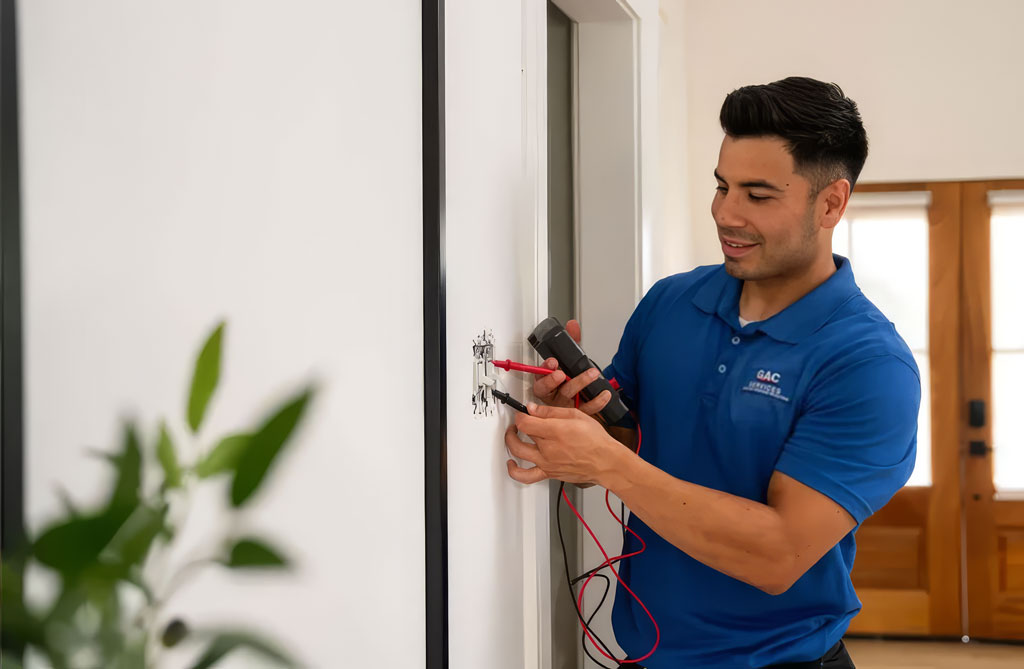
If you have an outlet not working but the breaker is not tripped, the most common cause is a tripped GFCI outlet on the same circuit, often in a bathroom, kitchen, garage, basement, or outdoor area. Pressing the GFCI reset button restores power in many cases. Other possibilities include a switched outlet, worn outlet, loose wiring, or an AFCI breaker that has tripped without obviously appearing off.
How Do You Reset a GFCI Outlet?
Start by finding and resetting every GFCI outlet in the home because one tripped GFCI can shut off power to several regular outlets on the same circuit.
Look for outlets with TEST and RESET buttons in bathrooms, kitchens, garages, basements, and outdoor areas. The tripped GFCI may be in a different room from the outlet that stopped working.
Firmly press the reset button until it clicks. If the GFCI will not reset or immediately trips again, stop there because the circuit may have an electrical fault that needs professional diagnosis.
Why Is an Outlet Not Working When the Breaker Isn't Tripped?
An outlet can stop working without an obvious breaker trip because of a tripped GFCI, wall switch, failed outlet, loose connection, AFCI trip, or another failed connection upstream on the circuit.
| Likely cause | What's happening | What to do |
|---|---|---|
| Tripped GFCI outlet | A GFCI on the circuit tripped and cut power | Press RESET on every GFCI in the home |
| Outlet on a wall switch | A switch controls the outlet (half-hot) | Flip nearby wall switches |
| Worn-out / failed outlet | The outlet itself has failed internally | Have it replaced by a pro |
| Loose or backstabbed wiring | A loose connection broke the circuit | Call a licensed electrician |
| Tripped AFCI breaker | An arc-fault breaker tripped but looks "on" | Fully flip the breaker off, then on |
A half-hot outlet or switched outlet can create confusion because one receptacle may have power while the other does not. In other cases, an AFCI breaker can sit in a middle position that is easy to mistake for ON.
How Do You Troubleshoot a Dead Outlet Safely?
Safe troubleshooting should stop at checking GFCIs, wall switches, nearby outlets, and the breaker without removing the outlet or touching its wiring.
- Test nearby outlets. See whether only one outlet is dead or several outlets have lost power.
- Reset every GFCI. Check bathrooms, kitchens, garages, basements, and outside, even if they are not near the dead outlet.
- Check nearby wall switches. A switch may control all or half of the receptacle.
- Recheck the breaker. If it appears tripped or is sitting between positions, move it fully to OFF and then back to ON once. If it trips again, leave it off and call a licensed electrician.
- Test the outlet again. Use a small device you know works to see whether power has returned.
Do not remove the outlet cover, insert tools into the receptacle, or attempt to repair wiring. If these checks do not restore power, have a licensed electrician inspect the outlet and circuit rather than removing the receptacle or troubleshooting energized wiring yourself.
When Is a Dead Outlet Caused by a Wiring Problem?
If resetting GFCIs, checking switches, and resetting the breaker do not restore power, the cause may be a failed outlet or loose wiring that requires professional electrical repair.
A loose backstab connection can interrupt power at one receptacle and every outlet connected downstream from it. Connections can loosen or deteriorate over time, particularly in older electrical systems.
A worn outlet can fail internally as well. GAC can trace the affected circuit, inspect its connections, and complete outlet replacement or other electrical repair without homeowners having to troubleshoot energized wiring themselves.
What Warning Signs Mean a Dead Outlet Is Serious?
A dead outlet needs immediate professional attention if you notice a burning smell, scorch marks, discoloration, unusual warmth, buzzing, or sparks.
Stop using the receptacle and turn off its circuit if you can do so safely. Smoke or flames require an immediate call to 911 rather than continued electrical troubleshooting.
The Electrical Safety Foundation International identifies warm or discolored outlets, burning odors, buzzing, and sparking among warning signs that warrant attention from a qualified electrician. Electrical Safety Foundation International home electrical safety
These symptoms are different from a simple GFCI trip. They can indicate overheating or a deteriorated electrical connection that needs to be inspected before the circuit is used again.
When Should You Call GAC Services?
GAC Services' licensed electricians diagnose and repair dead outlets throughout Gaithersburg and Montgomery, Frederick, and Howard Counties with 24/7 availability.
GAC serves homeowners in Gaithersburg, Rockville, Silver Spring, Germantown, Frederick, Bethesda, Potomac, and surrounding Maryland communities. Our electricians can trace failed circuits, repair electrical wiring & rewiring, replace damaged receptacles, and inspect electrical panel & circuit breaker services needs when the problem extends beyond one outlet.
GAC provides upfront pricing and free estimates for electrical work.
Schedule Online or Call (240) 224-0192
Schedule Online
Frequently Asked Questions
One dead outlet can be caused by a tripped GFCI, wall switch, failed receptacle, or loose connection affecting that point on the circuit. Check GFCIs and switches first. If those checks do not restore power, have an electrician inspect the outlet and wiring.
Find the receptacle with TEST and RESET buttons and firmly press RESET until it clicks. Remember that the GFCI controlling your dead outlet may be in another room. If the button will not stay reset or immediately trips again, call an electrician.
Yes. Multiple outlets can be wired along the same circuit, so a failed or loose connection at one point can interrupt power to receptacles downstream. An electrician can trace the circuit to find where power is being lost.
A dead outlet is not necessarily a fire hazard if the cause is a tripped GFCI or wall switch, but loose wiring or an overheating connection can create a safety risk. Burning odors, warmth, discoloration, buzzing, sparks, or scorch marks require immediate professional attention.
Several dead outlets can share a single GFCI or another upstream connection. Reset all GFCIs first and check the breaker. If power does not return, a loose or failed connection may be interrupting the circuit and should be diagnosed professionally.
For recurring electrical problems or concerns about older wiring, GAC also provides electrical inspections.