




Blog
Why Is My Heat Pump Not Heating?
A heat pump not heating is usually caused by an incorrect thermostat setting, dirty air filter, iced or blocked outdoor unit, stuck reversing valve, or another system problem, although brief cool air during a defrost cycle is normal. If the cool air continues or the house cannot reach the thermostat setting, the system needs attention.
Is It Just the Heat Pump's Defrost Cycle?
A heat pump periodically enters a defrost cycle in cold weather to melt frost from the outdoor coil, and brief cool air indoors or steam outside during this cycle is normal.
The outdoor unit collects frost as it pulls heat from cold outdoor air. Defrost mode temporarily reverses operation to warm the outdoor coil and remove that frost.
Steam rising from the outdoor unit / condenser during defrost is water vapor, not smoke. Normal defrost lasts only a short time before the system returns to heating.
What Are the Common Reasons a Heat Pump Is Not Heating?
A heat pump can stop heating because of thermostat settings, restricted airflow, outdoor-unit icing, blocked airflow, a reversing-valve problem, low refrigerant, electrical trouble, or failed backup heat.
| Likely cause | What's happening | What to do |
|---|---|---|
| Thermostat set wrong | Not on HEAT, set too low, or fan on ON | Set to HEAT, above room temp, fan on AUTO |
| Dirty air filter | Restricted airflow reduces heat | Replace the filter (DIY) |
| Iced-over outdoor unit | Frost buildup blocks heat transfer | Switch to EM heat; call a technician |
| Blocked outdoor unit | Snow, leaves, or debris restrict airflow | Gently clear the area (DIY) |
| Stuck reversing valve | Unit stuck in cooling and blows cold air | Call an HVAC technician |
| Low refrigerant | Not enough charge to move heat | Call an HVAC technician |
A dirty air filter or blocked outdoor unit is easy to check. A reversing valve, refrigerant, sensor, or internal electrical problem requires professional diagnosis.
What Do "Aux Heat" and "Emergency Heat" Mean?
Auxiliary heat automatically helps the heat pump when additional heating is needed, while Emergency Heat is a manual setting that relies on backup heat instead of normal heat-pump operation.
| Setting | What it does | When to use |
|---|---|---|
| Heat | Heat pump provides efficient heating | Normal, everyday setting |
| Aux (auxiliary) heat | Backup heat strips assist automatically | Kicks in on its own in cold weather - normal |
| Emergency (EM) heat | Runs backup heat only, no heat pump | Only if the heat pump fails; less efficient |
Seeing auxiliary (AUX) heat on the thermostat during colder weather does not automatically indicate a problem. The system can activate its heat strips when the heat pump alone cannot satisfy the current heating demand.
Emergency (EM) heat is different. It should be used when the heat pump itself has failed and backup heat is needed until the system can be repaired.
What Can You Check Yourself When a Heat Pump Isn't Heating?
Homeowners can safely check the thermostat, filter, breakers, and outdoor-unit airflow before calling an HVAC technician for a heat pump that will not heat.
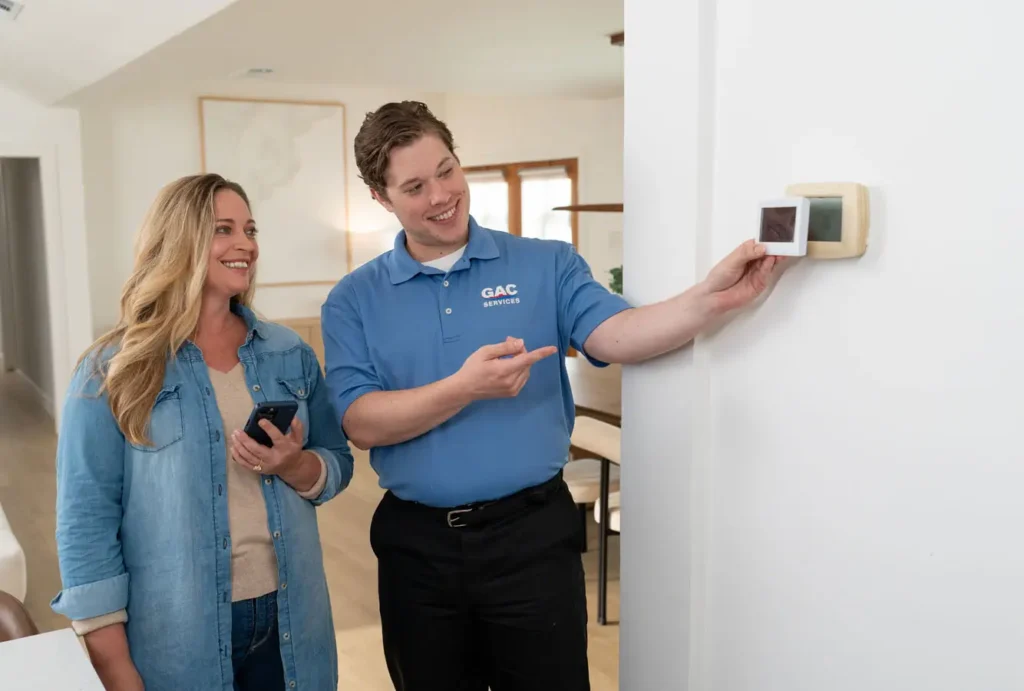
- Check the thermostat. Make sure the thermostat is set to HEAT, the temperature is above the current room temperature, and the fan is set to AUTO.
- Inspect the air filter. Replace a dirty filter that is restricting airflow.
- Check the breakers serving the indoor and outdoor equipment. If one has tripped, reset it once. If it trips again, leave it off and call a technician.
- Inspect the outdoor unit. Gently remove leaves, loose snow, and other debris restricting airflow.
- Look for excessive ice. A little frost can be normal, but a unit encased in ice or repeatedly freezing needs service.
Do not chip ice from the coil, force hot water over the equipment, open the unit, or handle refrigerant lines. If the outdoor unit is heavily frozen, switch to Emergency Heat and call a technician.
When Should You Call an HVAC Technician?
Call an HVAC technician if the heat pump keeps blowing cold air, repeatedly freezes, trips a breaker, or cannot warm the house after the basic thermostat, filter, and outdoor-unit checks.
Persistent problems can indicate low refrigerant, a stuck reversing valve, failed sensor, electrical fault, or backup heat that is not engaging. These problems require testing inside the equipment.
GAC provides heat pump repair and 24/7 availability for no-heat situations. Routine maintenance and a heat pump tune-up can help identify developing problems before they lead to larger heating issues.
ENERGY STAR recommends regular heat-pump maintenance, including filter care and professional service, to support efficient operation and help prevent equipment problems. ENERGY STAR heat pump maintenance guidance
When Should You Call GAC Services?
GAC Services provides heat pump diagnosis and repair throughout Gaithersburg and Montgomery, Frederick, and Howard Counties with 24/7 availability.
GAC's HVAC technicians serve Gaithersburg, Rockville, Silver Spring, Germantown, Frederick, Bethesda, Potomac, and surrounding Maryland communities. The team offers upfront pricing and free estimates for heating work.
If an existing system can no longer meet the home's needs, GAC offers heat pump installation & replacement. Additional heating services, including furnace repair, are available for other heating-system problems.
Schedule Online (240) 224-0192Frequently Asked Questions
A heat pump can briefly blow cooler air during a normal defrost cycle. If the air stays cold and the house is losing temperature, possible causes include a stuck reversing valve, low refrigerant, an iced outdoor unit, or backup heat that is not operating.
Some frost on the outdoor coil is normal, and the system should periodically enter defrost mode to remove it. A unit that becomes heavily encased in ice, repeatedly freezes, or never returns to normal heating needs professional service.
Auxiliary heat comes on automatically when the heat pump needs help meeting heating demand. Emergency Heat is selected manually and relies on backup heat instead of normal heat-pump operation. Use Emergency Heat when the heat pump has failed, not simply because the outdoor temperature is cold.
Not just because it is cold outside. Leave the thermostat on its normal Heat setting and allow auxiliary heat to engage automatically when needed. Switch to Emergency Heat when the heat pump has failed or a technician instructs you to use it while waiting for repair.
Heat pumps can continue operating below freezing, but capacity and efficiency depend on the equipment and outdoor conditions. Each system has a balance point where the home's heating demand exceeds what the heat pump alone can supply, which is when auxiliary heat can help maintain the thermostat setting.